Dry-Eyed Drop-offs
It’s back-to-school season, and whether you’re dropping your child off for their first day of kindergarten or their first day of college, emotions are real, and not just your child’s. It’s okay to feel anxious about this next big step; however, it’s your job to keep your emotions in check and to convey to your child that everything is going to be alright. While I was fortunate enough to have my kids in school with me for many years, I can still feel the butterflies in my stomach that were dancing around on Maddee’s first day of 7th grade, and Max’s first day of high school, and they were teenagers at that point! Don’t even get me started on the college drop-off; like my dad before me, and despite best efforts to follow my own advice, I sobbed during college drop-off for both kids.
You know the Elizabeth Stone quote, “Having children is to decide forever to have your heart go walking around outside your body.” The first day of school is one of those moments when you can really feel that vulnerability. Your child is launching out on their own, and you aren’t going to be there to see what unfolds.
Over the years, I’ve watched countless parents and children struggle to separate during those first days of the new school year. This is normal. Saying goodbye even for a few hours is hard! Every parent-child relationship is unique, but there are some proven strategies that can help make separation easier for both you and your child.
Exude confidence. Your child, regardless of their age, will take their cues from you. If they know that you are comfortable with the school, the teachers, and the administration, they will build on that confidence. If you show that you are apprehensive or scared, you’re showing them they should be, too. It’s okay for you to feel anxious or sad, but try your best to stay composed until your child is out of sight.
Acknowledge your child’s fear or apprehension. Don’t be dismissive, but don’t be indulgent either. Listen, help them name it, let them know it’s a normal feeling. My friend Nikki reminds her children that anxious and excited feel the same way in your body, and you get to decide which one it is. You can also support your child by finding a connection point or something to look forward to. It may be a reminder about something they like about school, or it may just be letting your child know that you’ll see them at the end of the day. Word of caution: Don’t promise your child something if you aren’t sure about it. For example, I’ve heard parents promise children that they will see a favorite teacher or friend, not knowing that person is out with the flu. Now you’ve just inadvertently broken a promise to your child!
Remember that you and your child are not the same person. If you had a difficult time at school, whether socially or academically, my heart goes out to your younger self, truly. But you can’t let that younger self whisper past heartaches in your ear as you navigate your child’s experience. As a general rule, your inner child shouldn’t be ignored; sometimes, though, you need to give them a lollipop, ask them to sit quietly for a moment, and let your grown-up self handle this one.
Speaking of lollipops, avoid bribing your child to get them through the door. Bribery works for a day or two, but it doesn’t solve the situation, and it’s not sustainable. I promise you that on day four, when your child is three cupcakes deep before 8:00 am, you’re going to be questioning your strategy. Trust me on this.
A quick separation is a healthy separation. Don’t linger. Keep your goodbye ritual to under 30 seconds: a hug, a well wish for the day, and off they go. More importantly, off you go. I know it’s hard, but dragging out the goodbye is a signal to your child that you’re apprehensive or afraid. Don’t do that. See number one.
At the same time, a quick goodbye doesn’t mean an unengaged goodbye. Your child deserves your attention; you should be present. Don’t be on your phone during drop-off, even if it means rescheduling that important work call.
Respect the boundaries the teacher gives you. This includes the designated drop-off point. If your school does a car line, use the car line. If your school suggests dropping off at the door rather than walking your child to their room, do that. Teachers are in this business for a reason. Trust their ability to console your child. I’ve seen many teachers work absolute magic when consoling a child. Leave it up to the experts.
Trust your child. You already know your child is capable and smart. Now you just need to trust that. The first few days may very well be bumpy, but they may be smooth. Trust your child to navigate what comes their way. While you’re at it, trust your own ability and parental instincts. Keep communication open to ensure that if something isn’t going well, you will find out about it. My friend Chelsea always had her children share a high and low after school every day. They did this all the way through high school. It’s a great habit to get into right away and a great window into their day.
If your school doesn’t already offer it, organize a boo-hoo breakfast. Plan a coffee shop outing with a few other parents. Meet up after that first drop-off to cry, laugh, and console. While you should hold it together in front of your child, afterward you are encouraged to lean into your emotions. Some schools already have an event like this organized for parents, but if not, you can create one yourself. When we dropped Max off at college, Lewis and Clark did a Tissues and Tears happy hour for parents. It was timed just right and really a perfect place to let the tears fall and the wine flow. This was an evening event; I recommend a latte over the glass of wine if you’re doing a breakfast, but then again, I won’t judge.
Ask for help. Sometimes we need to get a little creative. You are trying for the 30-second drop-off, but your child is glued to your leg and sobbing. How could you possibly leave them? You can. You should. And it’s okay to ask for support. Whether that’s getting the eye of a school employee and letting them take over, or asking another parent if your child can walk in with their child, sometimes we need to enlist the village. That’s okay!
You can always call the school to check in. Yes, they are busy. No, it shouldn’t be a daily habit. Still, as noted before, school employees are highly empathetic. They’re there for the children and are typically happy to take a minute to peek in on a child and see how they’re adjusting. I tell parents to wait thirty minutes and call the school to check in. Most of the time, your child has settled in by then, and that’s just the reassurance you need to get through your day.
Remember, your child is the child, and you are the grown-up. It’s natural to feel emotional about this milestone, but try not to make your child responsible for taking care of your feelings. This is their first day, and they need to know that you trust them to take this next step. You can miss them terribly and still send them off with confidence. Now take a deep breath and know it’s going to be okay!
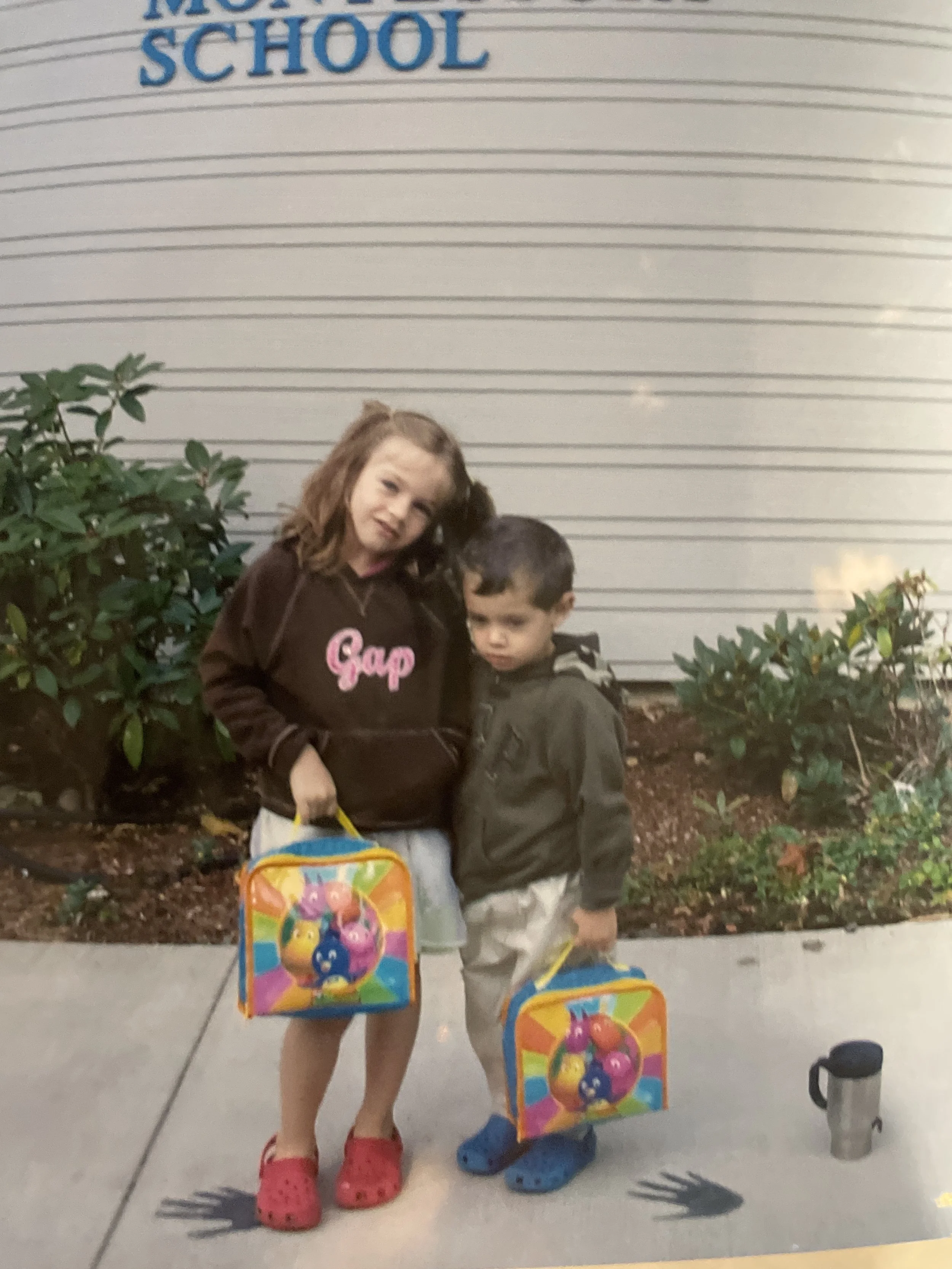
Maddee and Max 2006. First day of kindergarten and first day of preschool.